

Power Is Permission

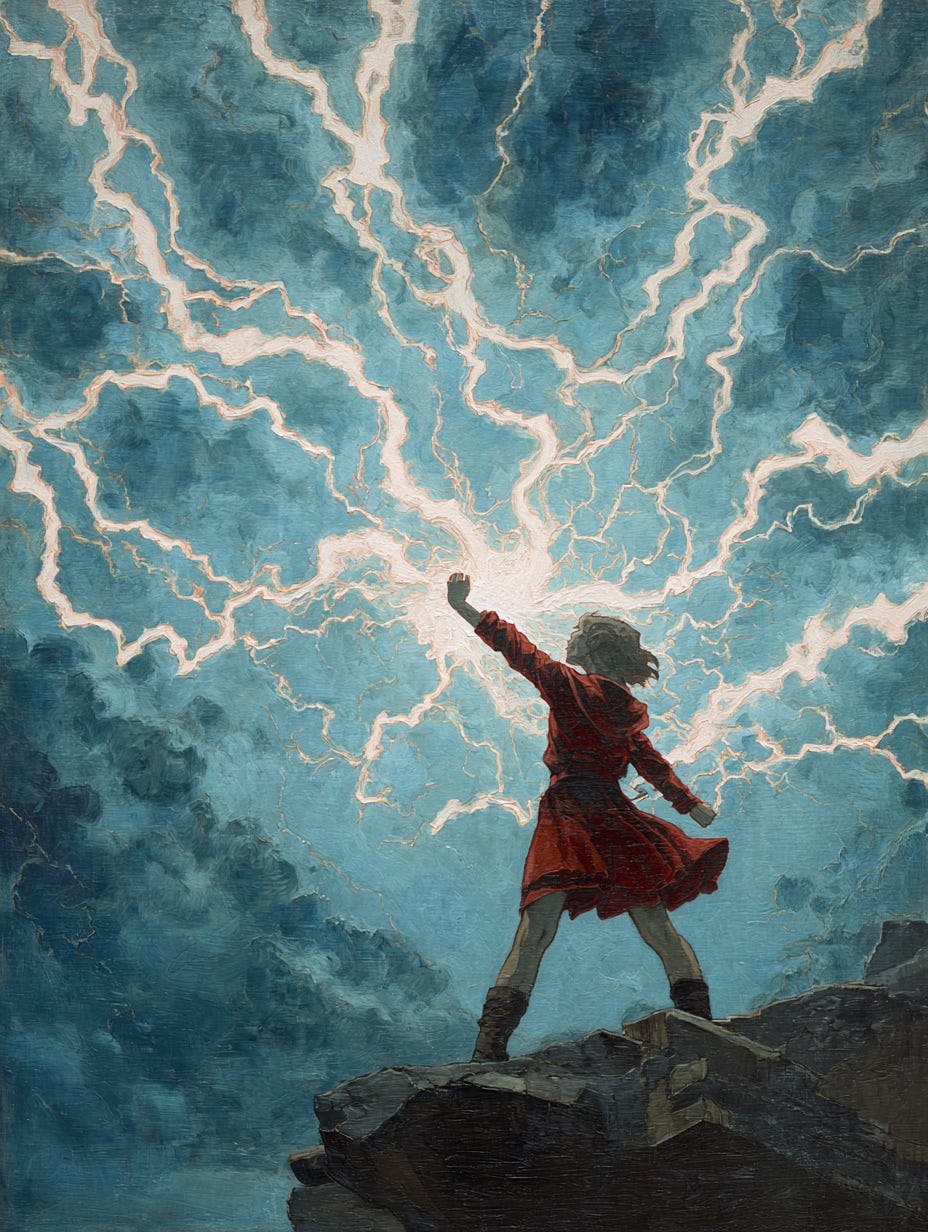
Most people think power is what you have: money, followers, a platform, a title. That’s why they don’t understand how powerful people fall.
Power isn’t what you have. It’s what you’re allowed to keep.
It’s what other people and systems keep granting you, quietly, daily, for practical reasons.
Power is permission. And that permission doesn’t come from one place.
Banks decide what’s fundable. Insurers decide what’s coverable. Regulators decide what’s tolerable. Courts decide what’s enforceable. Employees decide what’s workable. Platforms decide what’s sharable. Customers decide what’s worth paying for.
When those permissions align, you look unstoppable. When they reverse, you don’t just lose public approval, you lose operating capacity.
That’s why some powerful people look like they’re sabotaging themselves. From the outside, it’s baffling: why pick avoidable fights, create backlash, and invite scrutiny?
They’re not stupid. They’re optimizing for the wrong kind of power: loud power, not durable power.
Attention
Attention is modern gravity. It pulls resources toward what’s dramatic, simple, and emotionally charged. Conflict travels. Outrage compresses complex reality into a shareable packet. Identity snaps into place: us versus them.
Spectacle builds a loyal base that feels like armor.
And that’s the first trap: confusing loud loyalty with durable legitimacy.
Loyalty is intense devotion from a subset. Legitimacy is broad, boring acceptance across many groups, some who don’t even like you, but still tolerate you.
Loyalty can defend you online. Legitimacy keeps your financing stable, your insurance intact, your partners close, your regulators calm, and your talent pipeline open.
When power feels threatened, most leaders reach for loyalty because it’s immediate and visible. But legitimacy is what keeps the world from coordinating against you.
Enemy Density
One enemy can be manageable.
Enemy density is when you pick fights with groups that can actually stop you, then give them a reason to coordinate.
Pick fights with journalists, you get scrutiny.
Pick fights with regulators, you get enforcement.
Pick fights with employees, you get leaks and churn.
Pick fights with partners, you get distribution tightening.
Pick fights with financiers, you get cost-of-capital pressure.
Pick fights with political factions, you get policy risk.
At first, these groups act separately. Then incentives align. They start linking.
Reporting triggers hearings. Hearings trigger investigations. Investigations trigger lawsuits. Lawsuits create discovery. Discovery produces new reporting. Boards get nervous. Risk committees reprice exposure. Insurers rewrite coverage. Partners insert exit clauses.
Coordination is the natural result of shared risk.
Institutional Lag
Institutions are slow. But slow is delayed force.
Evidence accumulates. Precedents harden. Coalitions form. Leadership rotates. Reputations settle.
A powerful actor can “get away with it” for a while and learn the wrong lesson: that rules don’t apply. Then the constraints arrive all at once.
What looks sudden is often consequences that were already in motion.
The jokes turn into “concerns.” Leaks start. Executives quietly leave. Contracts get rewritten. Insurance gets pricier. Banks demand tighter covenants. Partners want exit clauses. Regulators stop giving the benefit of the doubt. Recruiting gets harder. Lawsuits multiply.
It doesn’t feel like one event. It feels like the world getting slightly less cooperative every week, until you realize you’re trying to run an empire with the permissions revoked.
The Inner Collapse
When power becomes personal, feedback breaks.
The leader’s identity becomes the brand: “If I fall, we fall.” Disagreement becomes disloyalty. Mistakes can’t be admitted because it would “damage the image.” The leader starts needing to win emotionally, not just solve problems.
Feedback is how reality reaches the top: complaints, weak points, legal risk, internal problems, everything that needs fixing.
But the organization stops being a truth machine and becomes a loyalty machine.
Bad news becomes dangerous to deliver. Reality gets filtered. People tell the leader what the leader wants to hear. Metrics get massaged. Warnings get softened.
So decisions get made with distorted inputs.
The system can still look strong, but it becomes brittle. It stops correcting mistakes early. Problems grow quietly until they explode publicly.
If people can’t safely tell you the truth, reality will tell you later through consequences.
Underneath
Stability is engineered. Credit, regulation, insurance, and reputation are shock absorbers.
Legitimacy isn’t PR. It’s the operating system. If people believe the rules are arbitrary and two tiered, they withdraw consent and cooperation.
And when enough groups feel harmed, they organize, not because they became saints, but because their interests align.
Error Correction
Strip away the personalities and power systems fail for a boring reason: error correction fails.
When truth can’t move upward, the system gets noisy.
When computation is insulated from reality, outputs get reckless.
When you antagonize enough nodes, the network routes around you.
That’s the immune response: the more damage you do, the more coordinated the system becomes. When stability is threatened, ideology melts into survival instinct.
Durable
You can build power that runs on fear and spectacle, or you can build power that runs on trust and truth.
Fear-based power always needs more: more control, more enemies, more performance. And eventually it breaks under its own weight.
Trust-based power is quieter. But it lasts.
It doesn’t need a new enemy every week to feel strong.
It doesn’t need applause to stay steady.
It doesn’t need people walking on eggshells.
It protects legitimacy. Chooses battles carefully. Rewards truth early. And keeps ego on a leash.
You keep your word. You pick fewer fights. You fix problems before they become headlines. You build something that works without you.
Make it easy for people to work with you.
Make it safe for people to tell you the truth.
Make it possible for people to trust you even when they don’t love you.
Then you can correct course. You can survive storms. You can keep your permissions when others lose theirs.
That’s durable power.
Quiet power. Real power. Power that lasts.
Legitimacy sometimes makes you look "Sleepy" because of its inherent stability, which is boring to those who crave constant headline news. As we have found, though, those constant headlines ultimately create overwhelm and exhaustion. I sincerely prefer sleepiness to the zone being flooded all day every day but I knew that back in 2024. Apparently, that just wasn't tolerable to many people. The election was stolen but that's another story.
I've refused to give up hope for accountability at some point though. I really do agree that the current system is unsustainable and will eventually break.
Excellent and timely article. Very well stated.